
SUDAN CONFLICT: ACCELERATING FEMINIST FUNDING AS A CRISIS RESPONSE STRATEGY
UAF-Africa Donor Brief, September 2023 Unpacking the Crisis Paradigm and Impact on WHRDs The devastating…
Overview
The Urgent Action Sister Funds consortium is inviting thought-provoking and solutions-oriented contributions focusing on ‘collective care in permacrisis’, for a proposal for an in-depth series with the Stanford Social Innovation Review (SSIR). We are seeking short pieces (no more than 2000 words) from a range of authors, including activists, academics, philanthropists, cultural workers (such as traditional healers, poets, creative writers, artists, etc), from different identity groups (particularly LGBTQIA+, ethnic minorities, people with disabilities), and in geographically diverse locations. All contributors whose work is selected to be published in the in-depth series will be paid. $500 USD will be paid for single-authored contributions. $750 USD will be paid for multiple-authored contributions. Please read on for more information. Deadline for abstracts: 12 January 2026
Care in Crisis: why we need collective care in frontline responses to permacrisis
We are living in an era of permacrisis, a continuous state of conflict, instability and upheaval, comprising wide-ranging, layered and intersecting challenges. These crises are pervasive, they intersect with one another, and are also interwoven with everyday structural harms. While the problems are easy to spot, holistic solutions are harder to identify, especially when we focus only on mainstream crisis response – which can even be part of the problem. Yet, frontline responses to permacrisis rooted in feminist principles are taking place in communities across the world everyday, with the potential to impact in positive and transformative ways, now and in the future. One of these feminist principles is collective care. The UAFs understand collective care as an anti-oppressive political framework that moves us towards healing and liberation through embracing a breadth of diverse practices that integrate holistic approaches to wellbeing, grounded in ancestral and community knowledge. Collective care is underpinned by a political analysis that recognises that a lack of care shapes an era of permacrisis, meaning that care can reshape our relationships with each other and the planet. Understandings of collective care will likely vary in different geopolitical locations. In this in-depth series, we aim to visibilise and reflect on the role of collective care in responding to permacrisis by bringing together a range of voices and examples based on real-world, lived experience. In particular, we ask, how does collective care enable us to respond to, and look beyond, an era of permacrisis?
We are inviting contributions for this in-depth series further guided by the following sub-questions:
We encourage submissions that are:
Reflective: Explore rather than sell ‘solutions’. We are interested in contributions that reflect on successes, surprises, failures, and setbacks.
Distinctive: We are looking for you to provide a strong voice and welcome disagreement, challenge and critique.
Focused on real experience: We are looking for contributions which focus on solutions based on concrete examples, rather than theoretical concepts.
Interesting to the SSIR audience: SSIR readership is global, and audiences are connected by an interest in social change. Most readers occupy management or leadership roles within their organisation, which is likely to be an NGO, foundation or other philanthropic institutions, or they form part of business, government or academia.
If you have an idea for a contribution that approaches responses to permacrisis rooted in collective care that is not on this list, please do contact us to chat about your idea.
How to submit
Please send a document including the following information to tallulah.lines@york.ac.uk :
We can receive contributions in English, Spanish and Portuguese.
SSIR in-depth series bring together a range of different perspectives on a central social innovation theme, expressed through a range of article types, and based on solid real-world examples. We will make our decision on submissions based on these criteria, and additionally, we aim to include geographical spread and to foreground voices which would not typically be heard in academic spaces (e.g. frontline activists and practitioners). An in-depth series usually contains up to 12 articles.
We will respond to all those who contribute an abstract with our decision by 20 February 2026.
Thank you for taking the time to submit your idea!
UAF-Africa Donor Brief, September 2023 Unpacking the Crisis Paradigm and Impact on WHRDs The devastating…
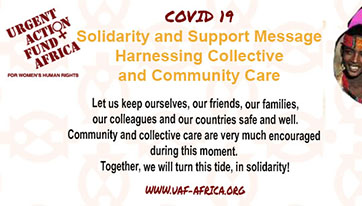
The impact of the Coronavirus (COVID-19) pandemic is felt throughout the world, as it continues…
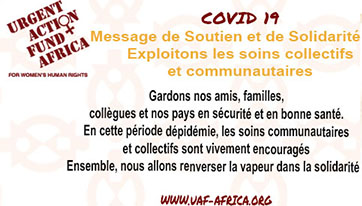
Suite à la propagation rapide du virus Corona (COVID-19), l’impact de la pandémie se fait…